How to Hire a Web Designer in Singapore Without Getting Scammed
A practical guide for Singapore business owners on hiring a web designer — without the costly mistakes.
Table of contents
Free Website Audit
We'll personally review your website across 6 areas. UX, SEO, performance, mobile, conversion, and send you a detailed, actionable report within 48 hours. No cost. No catch.
Hiring a web designer in Singapore is straightforward when you know what to look for, and costly when you don't. The most common mistake business owners make is prioritising price over process. This guide walks you through the questions to ask before signing, the red flags that signal risk, and what a genuinely reliable web design partner looks like. Whether you're building your first website or moving away from a provider who went silent post-launch, this is what you need to know before you commit.
This guide is designed to change that. By the end of it, you'll know exactly how to evaluate any web designer or agency, and walk away with confidence that you're making the right call.
What's The Reason Business Owners Get Burned
When we ask clients who come to us after a disappointing experience what went wrong, the answer is rarely 'the design was terrible.' More often, it's something like: 'Every time I needed a change, they charged me extra,' or 'After delivery, I couldn't reach anyone.'
The root cause is almost always the same: they optimised for price at the start and paid for it later.
This isn't unique to Singapore, but it's particularly common here. Singaporeans are savvy buyers, they compare relentlessly, which is a good thing. But in the context of web design, price comparison without the right framework leads to choosing the cheapest quote, not the most valuable one.
And with the rise of AI-powered tools and vibe coding platforms in 2026, the conversation has shifted further. Some business owners now wonder whether they need a professional designer at all, if Claude Code or a similar tool can produce a passable landing page in an afternoon, why pay thousands?
The answer is nuanced. AI tools are genuinely impressive for quick prototypes and wireframe ideas. But there's a meaningful difference between what AI website builders can't do and what a professional agency delivers: strategy, brand thinking, UX rigour, performance optimisation, and, critically, ongoing support. If you're a serious business building for the long term, you want a partner, not just a deliverable.
Questions You Must Ask Before Hiring Anyone
Most people walk into a web design brief asking about timelines and prices. Those matter, but they're not the questions that reveal whether a provider is trustworthy. Here are the ones that do.
1. Is there a warranty period after delivery?
This is the single most revealing question you can ask. A professional agency will have a clear, documented answer. At ALF, every one-off website project includes a standard 30-day warranty period. If something breaks or isn't right within that window, we fix it at no extra charge.
A provider who hesitates, gives a vague answer, or says 'it depends' is telling you something important about how they operate post-launch.
2. Who can I contact after the website is delivered?
This sounds obvious, but you'd be surprised how many business owners never think to ask it before signing. Get a specific name or team, a communication channel, and a response time expectation. If the answer is 'just email us,' ask what the turnaround is. If they can't answer that question, consider it a red flag.
At ALF, every client, from one-off projects to retainer arrangements, knows exactly who they're working with and how to reach us.
3. What is included in your post-launch support?
Post-launch support is where cheap providers cut corners. Ask specifically: Are content updates included? What about bug fixes? Is there a website maintenance plan available? And what does it actually cover?
For retainer clients, ALF treats their website the way we treat our own: monitoring, analytics reviews, UX checks, and proactive improvements. That's the level of care a business website deserves.
4. Can I see your portfolio and speak to a past client?
Any agency worth hiring should have a portfolio of completed work they're proud of. Look beyond aesthetics: do the sites they've built perform well? Do they load quickly? Are they mobile-friendly? A beautiful site that loads slowly or breaks on mobile is not a success.
If possible, ask for a reference. A past client who will speak well of the agency is far more valuable than any testimonial on a website. If you'd rather start from a vetted shortlist than evaluate agencies from a cold start, our list of the Top 10 Website Design Agencies in Singapore is a reasonable place to begin.
5. How do you handle revisions and scope changes?
This is where disputes often begin. Some providers include a fixed number of revisions in their quote; others charge per round. Neither is inherently wrong, but you need to know upfront. Ask how they define a 'revision' versus a 'scope change,' and what the process is if requirements shift during the project.
Understanding how long a website project typically takes in Singapore can also help you set realistic expectations before you even start the conversation.
Red Flags to Watch Out For
Beyond the questions above, there are several behavioural signals that should give you pause, regardless of how impressive the portfolio looks or how competitive the quote is. You might also want to check out this helpful article from Purpose & Pixel.
They agree to everything
This is counterintuitive, but a designer who says 'yes' to every single request is not necessarily a good thing. Good designers push back. They'll tell you when a feature idea is going to hurt usability, when a design direction doesn't reflect your brand, or when a timeline isn't realistic.
If a provider agrees to absolutely everything without questioning anything, they're likely more interested in closing the deal than delivering what's best for your business. Over-promising is one of the most common patterns we see with problematic providers, and it almost always leads to under-delivery.
Pricing is vague or refuses to itemise
A quote that just says 'website, S$3,000' without any breakdown is a red flag. You should be able to see what you're paying for: design, development, number of pages, CMS setup, SEO configuration, and so on. If a provider won't itemise, you have no basis for comparison, and no protection if there's a dispute later. For reference, our website design cost guide explains what each tier of investment typically includes.
No structured onboarding process
When you engage a professional agency, you should feel supported from day one. At ALF, the moment a client signs, they receive a welcome email, a shared Google Project folder for content uploads, and a clearly mapped timeline in a Google Sheet.
If a provider doesn't have a structured way of getting a project started, that lack of organisation will show up at every stage of the engagement, not just the kickoff.
Pressure tactics and urgency
'This price is only valid until Friday.' 'We only have one slot left.' Professional agencies don't operate this way. If you're being pressured to decide quickly, take that as a signal to slow down, not speed up.
No clarity on who owns the website after delivery
This is a significant legal and operational concern. Do you own the domain? Do you have access to the hosting account? Do you hold the login credentials for the CMS? These questions need clear answers before you sign anything. Some providers structure arrangements in ways that create ongoing dependency, which can become expensive and frustrating over time.
The SME Blind Spot: Why This Keeps Happening
The businesses most vulnerable to a poor web design experience are SMEs without a dedicated marketing or digital team. And that describes the majority of Singapore's business landscape.
Without internal expertise, it's easy to assume that all web design agencies are broadly the same, that the main variables are price and turnaround time. So the rational decision becomes: go with the cheapest option that seems reasonably credible.
What's missing from that calculation is the cost of what happens after delivery. Every edit that requires a paid request. Every question that goes unanswered. Every week the website sits with a broken form because there's no one responsible for maintaining it.
The true cost of building a website yourself, or of going with the cheapest option, almost always exceeds what you'd have paid for a proper engagement from the outset.
This is especially true for businesses in competitive Singapore markets, where your website isn't just a brochure, it's often the first impression a potential customer has of your brand. A slow, poorly maintained, or confusing website doesn't just cost you credibility. It costs you enquiries.
What a Good Web Design Process Actually Looks Like
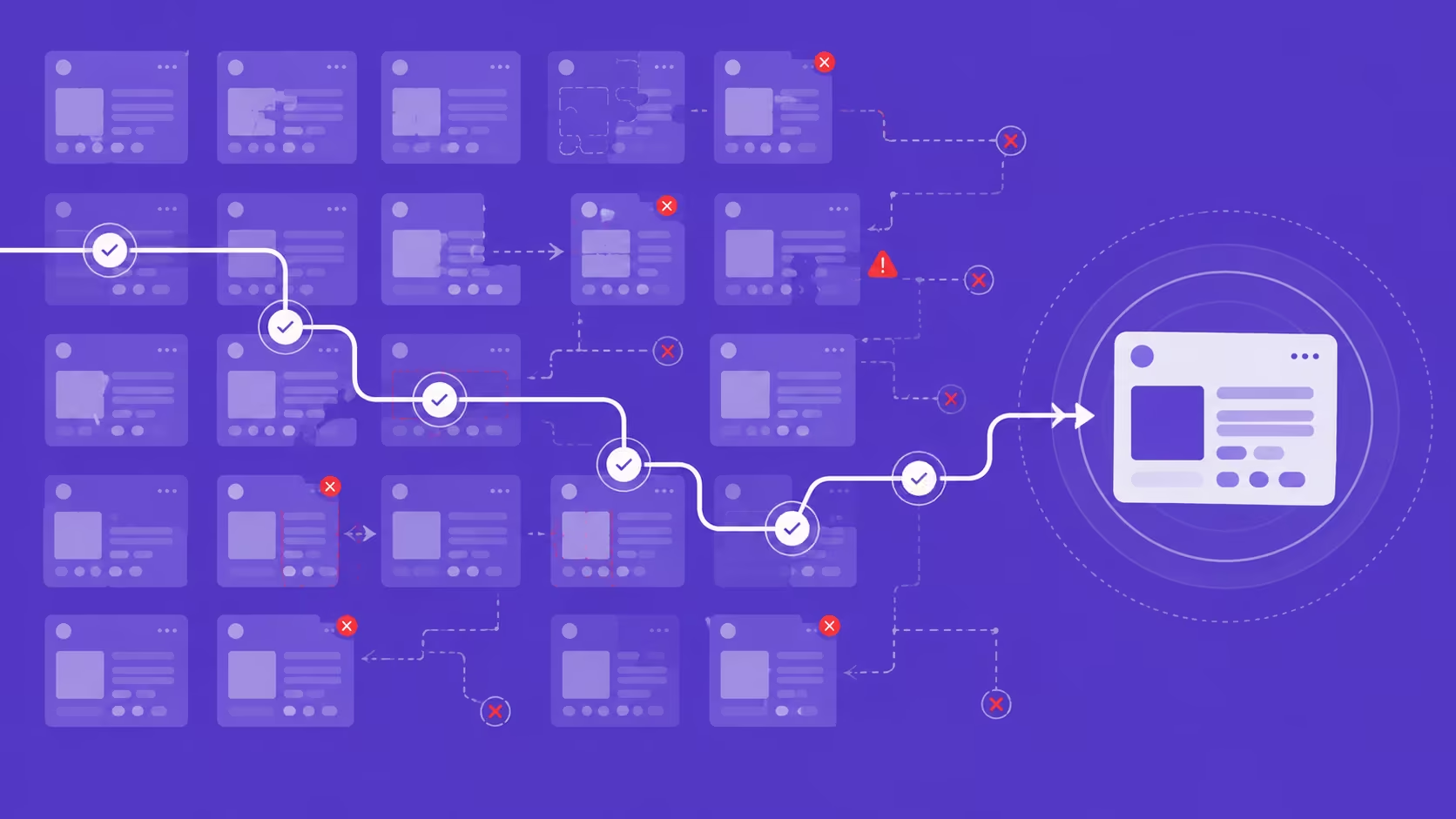
If you've never worked with a professional agency before, it helps to understand what a properly run web design project and its step-by-step process should look like, so you can tell when something's off.
If any of these stages are missing or vague in the provider's proposal, that's worth raising before you commit.
A related question worth naming: freelancer or agency? If you're still weighing that up at all, our full comparison of freelancers and agencies covers pricing, risk, and when each makes sense. This guide assumes you've already decided and covers how to vet whoever you pick.
One more question we get a lot now: could I just build this myself with AI? What AI website builders still can't do covers that honestly;l this guide assumes you're hiring a person and tells you how to vet them.
Frequently Asked Questions
How do I know if a web designer in Singapore is legitimate?
Check for a verifiable portfolio, client testimonials you can independently verify, a clear company registration (you can search via ACRA), and a structured proposal process. Legitimate providers will have no issue answering all the questions outlined in this guide.
What's a fair price to pay for a web designer in Singapore?
That depends on your scope. A basic SME website typically falls in the S$4,500 to S$8,000 range when working with a reputable agency. See our full web design cost breakdown for detailed tier-by-tier guidance.
What should be included in a web design contract?
At a minimum: scope of work (pages, features, deliverables), timeline and milestones, revision policy, payment schedule, who owns the website assets post-delivery, and what post-launch support is included. If any of these are missing from a contract, ask for them before signing.
Is it cheaper to hire a freelancer or an agency in Singapore?
Freelancers are typically cheaper upfront. Agencies cost more initially but often deliver better value over time due to team expertise, project management, and ongoing support. The right choice depends on your project's complexity and how much support you expect to need after launch.
What happens if the web designer disappears after delivery?
This is the most common complaint we hear from businesses who went with an unvetted provider. Prevention is the best approach: ask about post-launch support before you engage, get it in writing, and ensure you hold all login credentials and domain access from day one. If you're already in this situation, reach out to us, we regularly help businesses recover and rebuild from exactly this scenario.
Conclusion: The Right Designer Is Worth It
Hiring a web designer in Singapore doesn't have to feel like a gamble. The businesses that get burned almost always made the same mistake: they treated it as a price comparison exercise rather than a due diligence one.
Ask the right questions before you sign. Look for structure, transparency, and a clear answer to 'who do I call after launch?' And be appropriately sceptical of anyone who agrees with everything you say without pushing back once.
The agencies that do their best work are the ones that care about your results, not just your signature on a contract. That's the standard worth holding any provider to.
If you're ready to have a proper conversation about your website project, get in touch with ALF Design Group. We'll be straight with you about what you need, what it'll cost, and whether we're the right fit.
{{build-better-experience="/directory"}}
Categories
Written By
.webp)
Resources
Related Articles
Deep dive into our latest news and insights.