
How Long Does a Website Project Take in Singapore? (2026 Timeline Guide)
Most Singapore SME websites take 6–10 weeks. Here's what drives the timeline and how to avoid delays.
Table of contents
Free Website Audit
We'll personally review your website across 6 areas. UX, SEO, performance, mobile, conversion, and send you a detailed, actionable report within 48 hours. No cost. No catch.
For most Singapore SMEs, a professionally built website takes 6 to 10 weeks from initial briefing to launch. Simple brochure sites of three to five pages can be delivered in four to six weeks. E-commerce and regulated fintech sites with complex requirements typically take ten to sixteen weeks. The range is wide, but the variables that determine where your project falls are well defined: scope, content readiness, decision speed, and the number of stakeholders involved in approvals. Get those four right and a website project moves close to its fastest realistic timeline.
One of the first questions Singapore business owners ask when they start a website project is also one of the hardest to answer directly: how long is this going to take? The honest answer is that it depends, but not in a vague, unhelpful way. The variables that determine a website project's timeline are specific, predictable, and largely within your control as the client.
I've laid out the realistic numbers, the phase-by-phase breakdown, and the honest explanation of why some projects run ahead of schedule while others run over. Before you start a web design project, it helps to know what the timeline actually looks like. If you're still at the planning stage, I've also covered website design cost in Singapore, which covers what each project type actually costs alongside how long it takes.
The Short Answer: Timeline by Project Type
According to research on website timelines across project types, small business websites typically require 6 to 12 weeks from start to finish. For Singapore projects specifically, the benchmarks break down as follows:
These are agency-led Webflow project timelines, from the day the brief is signed to the day the site goes live. They assume a structured process with clear milestones, a dedicated project lead on both sides, and content that's reasonably prepared. Projects with unprepared content, multiple decision-makers with no single point of contact, or scope that changes mid-project will take longer.
The Six Phases of a Professional Website Project
Every professional website build, regardless of platform or scope, moves through a predictable sequence of phases. Knowing what happens in each one tells you what to prepare, when decisions will be needed from you, and where delays are most likely to show up.
Phase 1: Discovery and Scoping (1-2 weeks)
Discovery is where the project gets defined, and the quality of this phase determines the quality of everything that follows. Good discovery produces a precise brief: the pages to build, the user flows to support, the integrations required, the CMS structure, and the launch date target. Poor discovery produces a vague scope that expands mid-project.
For Singapore businesses, discovery should also surface localisation needs, whether multilingual content is required, which local payment gateways must be supported, whether MAS or IMDA compliance affects content, and whether PSG or EDG grants are being applied for.
The single most valuable thing you can do before the discovery call: write a one-page brief covering your business objectives, target audience, your three to five most important pages, and any competitor sites you admire. Agencies who receive this brief deliver faster, higher-quality projects than those starting from a blank slate.
Phase 2: UX Research and Wireframes (1-2 weeks)
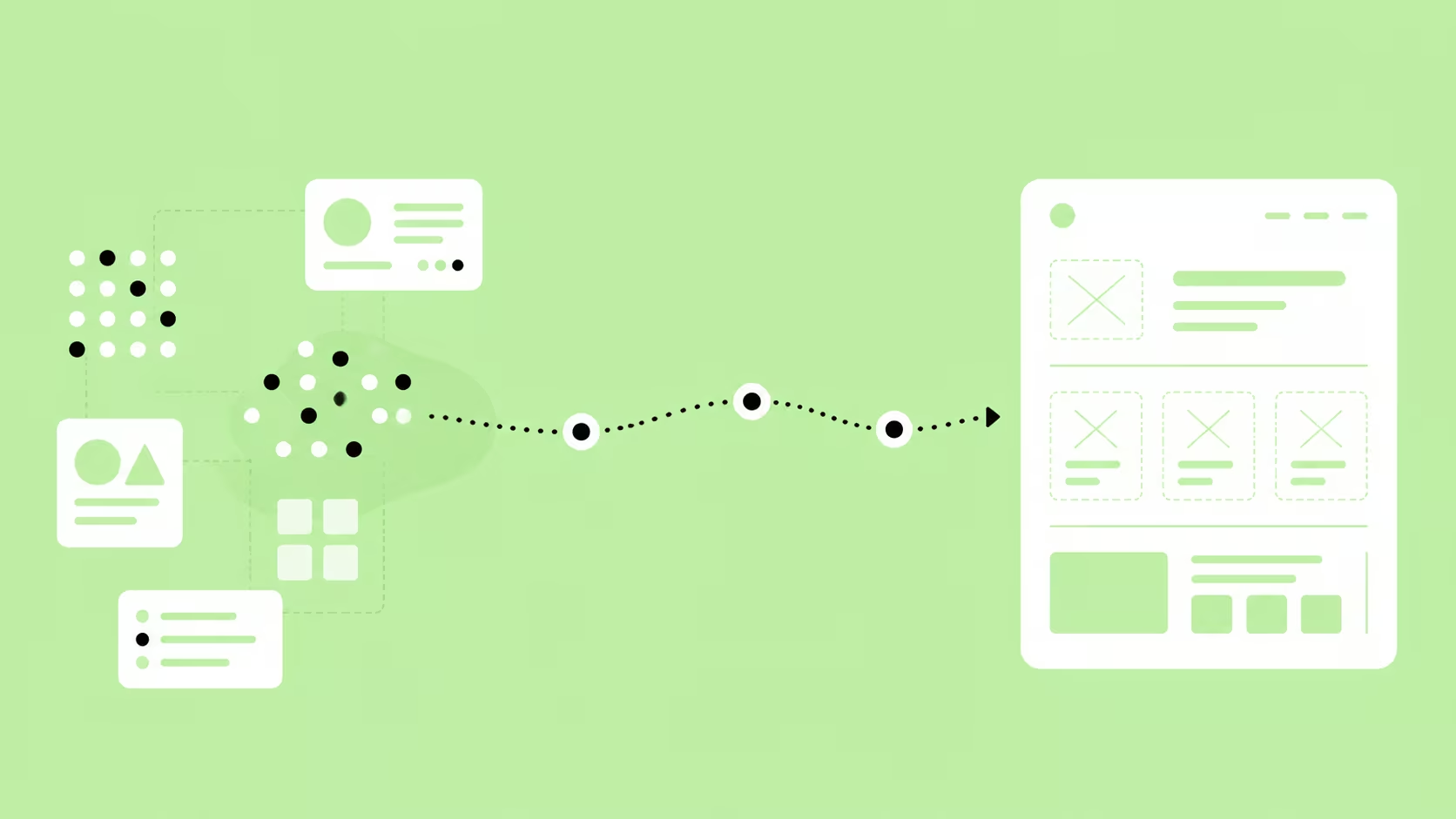
Before any visual design begins, the UX phase maps the site's structure: information architecture, navigation logic, user flows from entry point to conversion, and content hierarchy on each key page. This happens in Figma as low-fidelity wireframes, grey-box layouts that show structure without visual design, so structural decisions get approved before visual investment is committed.
Skipping this phase, going straight from brief to visual design, is one of the most reliable ways to extend a timeline. Structural problems found during visual design are expensive to fix; the same problems found at wireframe stage are cheap. My Webflow preparation guide covers what to prepare on your side to keep this phase efficient.
Phase 3: Visual Design (2-3 weeks)
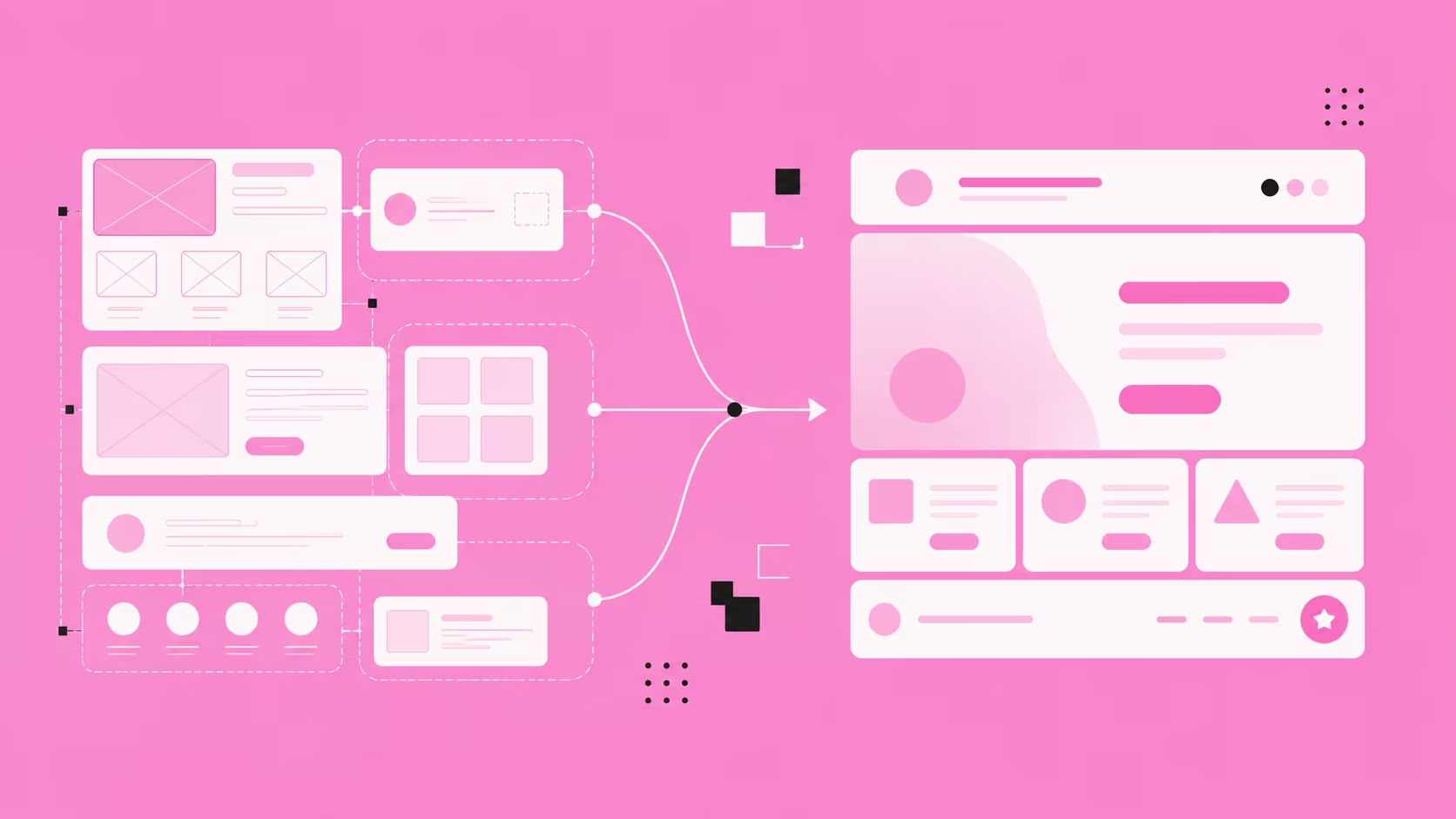
This phase applies your brand identity to the approved wireframe structure, producing high-fidelity Figma designs for the homepage, key interior pages, and every template type that will be built in Webflow. It's typically the phase that generates the most feedback and revision, which is appropriate since this is where the site's look and feel becomes concrete.
For most of my projects, I build a design system in Figma first (colour tokens, typography scale, button variants, spacing rules, component library) before designing individual pages, so every page is consistent from the start rather than needing retroactive harmonisation.
Consolidate all feedback into a single document per revision round rather than sending notes across email, WhatsApp, and voice messages. Fragmented feedback is the fastest way to introduce inconsistencies and extend the revision cycle.
Phase 4: Webflow Development (2-4 weeks)

With approved designs in hand, the build phase turns them into a live, responsive, CMS-powered site: building the design system from the Figma components, implementing all page templates, configuring the CMS schema, building interactions, connecting integrations such as HubSpot, Calendly, Analytics, and Meta Pixel, and implementing SEO foundations.
Webflow's visual nature means the build output matches the design intent without the interpretation gap that exists in traditional design-to-code handoff, which is why this phase tends to move faster than traditional development for most SME projects. See why businesses prefer Webflow for website design for more on why.
Phase 5: QA and Testing (1 week)
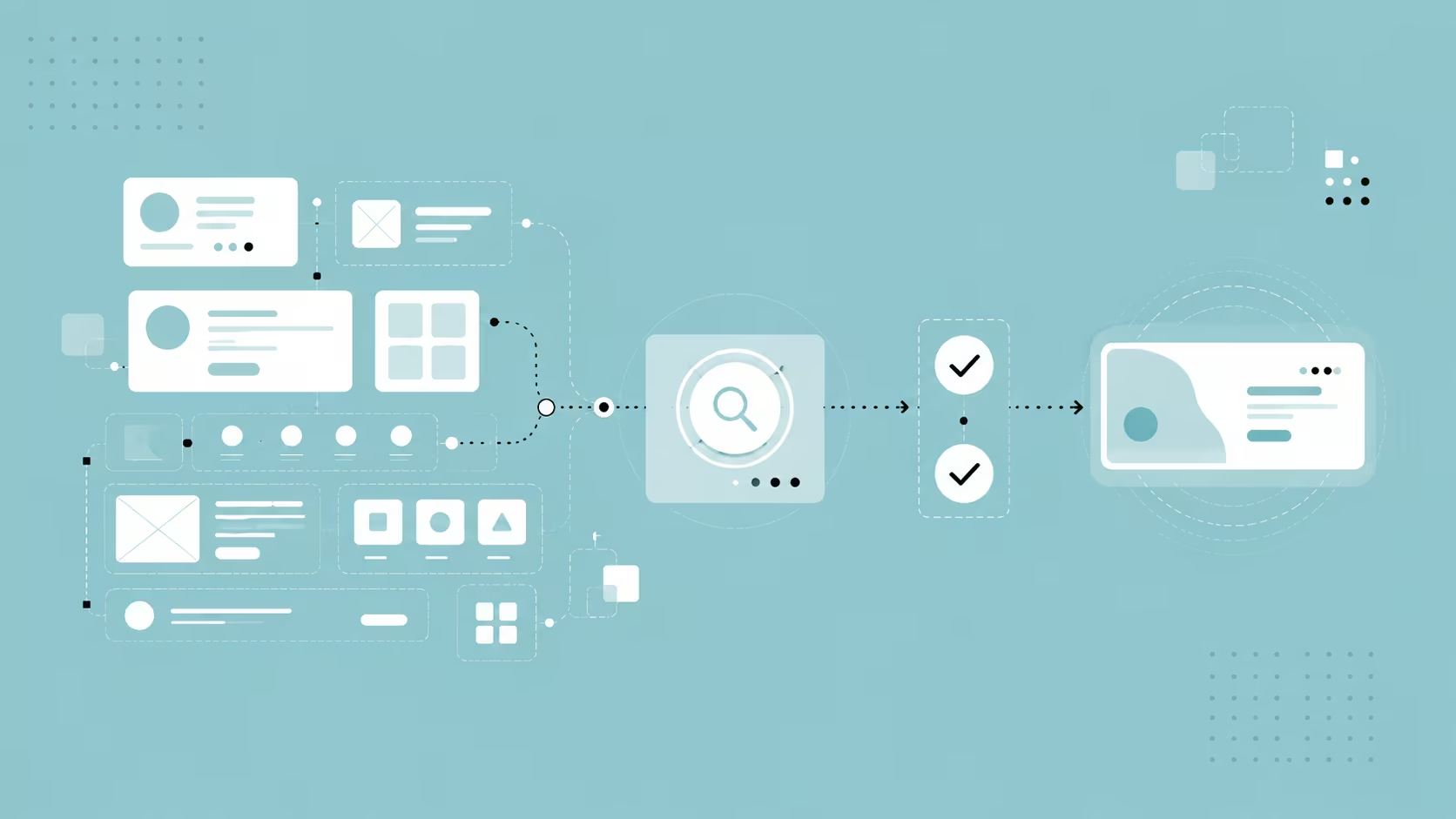
QA isn't a formality, it's a systematic check of every page, interaction, form, and device type against a defined standard. My checklist covers cross-browser rendering, mobile responsiveness across screen sizes, all form flows, page speed via PageSpeed Insights, accessibility checks, every internal and external link, and structured data validation.
For clients with a large content volume, or sites requiring MAS or IMDA compliance review, budget a few extra days here.
Phase 6: Launch and Handover (3-5 days)

Launch covers DNS configuration, final content population and proofreading, setting up GA4 and Search Console, submitting the sitemap, configuring redirects if applicable, and a 24 to 48 hour monitoring period to catch anything that only surfaces live.
Handover, training your team on the CMS, is included in every project I run. Webflow's editor is built for non-technical users, so your team can update content independently afterward. For what maintenance looks like after that, see website maintenance services in Singapore.
What Actually Causes Projects to Run Late
Most delays have nothing to do with an agency's production capacity. Across dozens of Singapore SME projects, the same causes show up consistently.
Content is not ready
This is by far the most common cause of delay, and the one most within the client's control. Content means the copy for every page, all photography, logos and brand assets in the right formats, video, and testimonials. A build can't move faster than the content that populates it. If design finishes on schedule but the team page can't be built because photos haven't been taken, the project waits.
Create a content delivery schedule at the start, page by page, with a named owner and a date for each. Treat it with the same discipline as the launch deadline itself.
Slow feedback and approval cycles
Each revision round has an implied response window. When feedback arrives in fragments, a few notes Monday, more Thursday, the cycle can't close and the next phase can't start. Projects where feedback lands within 24 to 48 hours move noticeably faster than ones where review stretches to a week or more.
The most efficient structure: one decision-maker who collects input from all stakeholders before sending consolidated feedback. Projects where multiple people send feedback independently, sometimes contradicting each other, are the ones most likely to run long.
Scope changes mid-project
Adding a page or a new integration mid-project doesn't just add build time for the new element, it often means reworking things already built. Scope changes are sometimes unavoidable, but each should be assessed for timeline and cost before approval rather than absorbed informally.
Multiple decision-makers without a clear hierarchy
Consensus-building across stakeholders is normal in Singapore, but it needs structure. If three people all need to approve the homepage and aren't available at the same time, a scheduled review meeting beats an asynchronous review that drags over two weeks.
How to Speed Up Your Website Project
The fastest website projects aren't those with the most generous budget, they're the ones where the client comes most prepared. The actions that most reliably accelerate a timeline:
- Prepare content before the project starts. At minimum, have draft copy for the homepage, services pages, and about page ready at kickoff. Polishing is faster than starting from scratch.
- Appoint a single project owner who collects all internal feedback before sending it to the agency. This eliminates conflicting notes and open-ended review cycles.
- Commit to 48-hour review turnarounds. Schedule the review into your calendar on the day of delivery rather than fitting it in around other priorities.
- Define your must-haves before kickoff. A focused initial scope launches faster and gives you real user data to inform Phase 2 decisions.
- Prepare brand assets in advance: logo in SVG format, brand colour codes, typography files, and any mandatory brand guidelines.
- Book photography before design begins. Team and product photography is one of the most common last-minute blockers.
Singapore-Specific Timeline Considerations
PSG and government grant applications
If you're applying for the Productivity Solutions Grant or EDG to offset the cost, factor in the grant timeline. PSG applications typically take four to six weeks for approval, and the project generally can't begin, or be invoiced, until that comes through. An eight-week project can become fourteen weeks in total once grant processing is included. Apply early, before finalising your agency, to minimise the wait.
Chinese New Year and major public holidays
If your project spans January to February, build Chinese New Year into the timeline, particularly for approvals, photography, and content delivery. It typically adds one to two weeks of delay to projects that straddle it, and the same applies to Deepavali and Hari Raya where relevant stakeholders observe them.
Regulatory review for fintech and healthcare
Websites for MAS-regulated financial services and MOH-regulated healthcare providers sometimes need legal or compliance review before launch, particularly for investment products, insurance, and medical services. This is conducted by the client's own legal team, not the agency, and should start alongside design rather than after it.
What a Realistic Project Timeline Looks Like
Below is a realistic week-by-week timeline for a standard Singapore SME Webflow website of eight to twelve pages, the most common project type I see.
- Week 1: Discovery call, project brief signed, sitemap agreed, content requirements briefed to client
- Week 2: UX research, wireframes for homepage and key pages, client review
- Week 3: Wireframe revisions, design system build in Figma, homepage design
- Week 4: Interior page designs (services, about, contact, blog template), client review round 1
- Week 5: Design revisions, Webflow build begins, design system and homepage
- Week 6: Webflow build, interior pages, CMS collections, interactions
- Week 7: Webflow build, integrations, forms, SEO implementation
- Week 8: Content population, internal QA, staging site delivered to client
- Week 9: Client review of staging, final amends, pre-launch checks
- Week 10: Launch, DNS configuration, post-launch monitoring, handover and training
This assumes content lands by the end of Week 3 and feedback returns within 48 hours at each milestone. Projects where content arrives in Week 6 launch in Week 13 or later, not because the agency is slow, but because content is the input that can't be substituted.
After Launch: What Comes Next
A launch isn't the end of the project, it's the start of the maintenance cycle. Search engines typically take four to eight weeks to fully index a new site and start returning ranking data. Analytics shows meaningful traffic patterns after about eight weeks live. The first post-launch UX review, heatmaps, session recordings, form completion, should happen four to six weeks post-launch once there's enough real data.
For SEO investment alongside the build, the timeline to measurable organic traffic improvement is typically four to nine months, depending on keyword competitiveness and content programme strength. For how to protect SEO through a launch, see SEO after a website redesign.
Frequently Asked Questions
Can a professional website be built faster than 6 weeks?
Yes, with the right scope and content preparation. A three to five page brochure site with copy and photography ready can realistically be designed, built, and launched in three to four weeks. The constraint isn't production speed, it's content availability and review cycle speed. Rushing by compressing review time or skipping wireframes usually produces a site that needs more rework post-launch than the time it saved.
Does a website redesign take as long as a brand-new build?
Usually less. Redesigns skip much of the discovery and information architecture work if the existing structure stays largely intact. Most Singapore redesigns run 6 to 10 weeks, similar to a new SME build, but can compress to 4 to 6 weeks if content, sitemap, and CMS structure carry over. The variable is scope: a visual refresh moves fast; a redesign that also restructures navigation, migrates platforms, or rewrites content top to bottom takes just as long as starting fresh, sometimes longer once redirects and legacy content are factored in. If you're weighing this, website design cost in Singapore covers how redesign pricing compares to a new build.
What if I need the site live by a specific date, a launch event or campaign?
Tell your agency the hard deadline at the discovery stage, not after the project starts, since it changes how the project gets scoped and phased. A fixed deadline usually means trimming the launch scope to what's essential on day one, with secondary pages following in a fast-follow phase. What it shouldn't mean is compressing review or QA, since rushed testing is where post-launch bugs come from. For what to have ready before your kickoff call, see my Webflow preparation guide.
Do smaller freelancers deliver faster than agencies?
Not reliably, and often the opposite. A solo freelancer can move quickly on a simple brief, but they're also a single point of failure; if they're unavailable or juggling other clients, your project stalls with no backup. An agency distributes work across a team, so one missed milestone doesn't necessarily delay the whole project. The bigger timeline risk with freelancers is usually availability and revision turnaround, not raw production speed. How to choose a web design agency in Singapore covers how to weigh this alongside cost and quality.
Can I launch in phases instead of all at once?
Yes, and for content-heavy sites it's often the smarter approach. A phased launch ships the core pages, homepage, key service pages, contact, on your target date, with blog archives or case studies following over the following weeks. That gets you live faster and gives you real user data for Phase 2 priorities. The trade-off is Phase 2 needs a defined timeline at kickoff, not a vague 'we'll get to it', or it tends to never happen.
My content is not ready but I need to launch soon, what are my options?
Three realistic ones: launch with placeholder copy on lower-priority pages and refine post-launch; narrow the scope to pages where content is ready and phase the rest in; or accept a later date and use the extra time to resource content properly, usually the option with the best long-term result. What doesn't work well is asking an agency to write comprehensive final copy from scratch under time pressure.
How does timeline affect the overall cost?
Compressed timelines can raise cost, since rushing usually means priority scheduling or a smaller scope to hit the date. Extended timelines don't necessarily lower cost, but they reduce risk, since more time for review catches issues before they need expensive rework. A realistic 6 to 10 week timeline with prepared content is usually the most cost-efficient path.
Conclusion
If you're planning a project, start by getting honest about your content readiness. That single factor determines your timeline more than anything the agency controls.
Prepare a content delivery schedule before kickoff, apply for PSG early if it applies to you, and book photography before design begins rather than during it. If your project spans January or February, build Chinese New Year into your target date now.
If you want to see what a well-structured project looks like from my side of the table, including how I scope, phase, and deliver Webflow projects for Singapore businesses, get in touch or start with a free website audit if you're assessing an existing site.
{{build-better-experience="/directory"}}
Categories
Written By
.webp)
Resources
Related Articles
Deep dive into our latest news and insights.


