Strong Foundations, Quiet Strength: What Fathers Teach Us About Good Design
How the quiet values of fatherhood — patience, stability, and purpose — mirror the principles of great design.
Table of contents
Free Website Audit
We'll personally review your website across 6 areas. UX, SEO, performance, mobile, conversion, and send you a detailed, actionable report within 48 hours. No cost. No catch.
Good design and great fatherhood share more than you would expect. Both depend on quiet strength, solid foundations, and the patience to build something that lasts long after the work is finished. This Father's Day, the team at ALF Design Group explores how the values that make a great father — stability, patience, structural thinking, and purposeful restraint — are the same values that make for great web design. Consider this a tribute to the unsung principles behind every digital experience worth remembering.
Every Father's Day, we take a moment to celebrate the men who shaped the way we see the world — not always with grand gestures or loud declarations, but with quiet consistency. A steady presence. A willingness to do the unglamorous work. The kind of person who fixes things before you even knew they were broken.
At ALF Design Group, we spend a lot of time thinking about what makes a digital experience genuinely good — not just visually impressive, but fundamentally trustworthy. And the more we reflect on it, the more we find ourselves thinking about fathers.
The parallels are everywhere. Both great dads and great design operate best when they go unnoticed. Both require a long view — one that prioritises lasting stability over immediate approval. Both leave behind a legacy that outlives the effort that went into building them.
This is a Father's Day tribute — to the dads in our lives, and to the design principles they quietly embody.
The Best Designs, Like the Best Dads, Go Unnoticed
There is a particular kind of father who is not the loudest in the room. He does not need to be. His strength lies in being there — consistently, reliably, and without needing acknowledgement for it. He is the one who fixes the leaky tap before anyone notices it, who arrives early and leaves late, who asks the quiet questions that help you figure out the answers yourself.
Great design behaves the same way.
When a navigation bar is perfectly structured, users do not think about the navigation bar. When a checkout flow is frictionless, nobody pauses to appreciate the UX decisions that made it feel effortless. The design disappears into the experience. It becomes invisible not because it is absent, but because it is doing its job so completely that there is nothing for the user to notice.
This is the benchmark we hold ourselves to when approaching UX/UI design — to create systems that users trust without thinking. If someone has to ask how to use something you designed, the design has not finished its job.
Design principle: Aim for clarity over cleverness. The interface that users forget they are using is the one that is truly working.
The best fathers, like the best designers, make the complex look effortless — because they have done the hard work to ensure it is.
Quiet Strength: Stability as a Design Value
Stability is not glamorous. It does not win design awards. But it is the quality that separates a website users return to from one they abandon after a single frustrating visit.
Think about what a father's stability provides: a reference point. Someone you can call when you are not sure what to do next. A presence that holds its form even when everything around it is changing. That reliability is not passive — it takes work to maintain. It requires showing up the same way, day after day, in a hundred small decisions that no one notices unless they go wrong.
In UX, this translates directly to design consistency. A coherent design system — consistent typography, predictable interactions, repeating visual patterns — provides users with a mental model they can rely on. They do not have to relearn the interface every time they land on a new page. They know where things are. They trust that the button they clicked before will behave the same way this time.
For Singapore businesses building digital products — where competition is high and user attention is short — that consistency is not a nice-to-have. It is the foundation of user trust, and trust is the foundation of conversion.
UX principle: A strong, consistent design system tells users: you are in safe hands. Inconsistency tells them the opposite.
Strong Foundations: Why Structure Comes Before Surface
Ask any architect, any engineer, or any father who has watched a child grow up, and they will tell you the same thing: everything depends on what is underneath.
A child raised with clear values — with a sense of what is right, what is worth working for, what is worth protecting — has a foundation that holds when life gets difficult. The surface details — how they dress, the career they choose, the city they live in — will change a hundred times. The foundation does not.
A website is no different. The visual design is the surface: the colours, the typefaces, the photography, the motion. All of it matters. None of it means much without the structure beneath it — the information architecture, the user flows, the content hierarchy, the grid system, the performance baseline.
This is why every web design project we take on begins not with a mood board, but with a brief. Not with visuals, but with questions: Who are the users? What do they need to do? What do they need to feel? What decisions will they make on this page, and what information do they need to make them well?
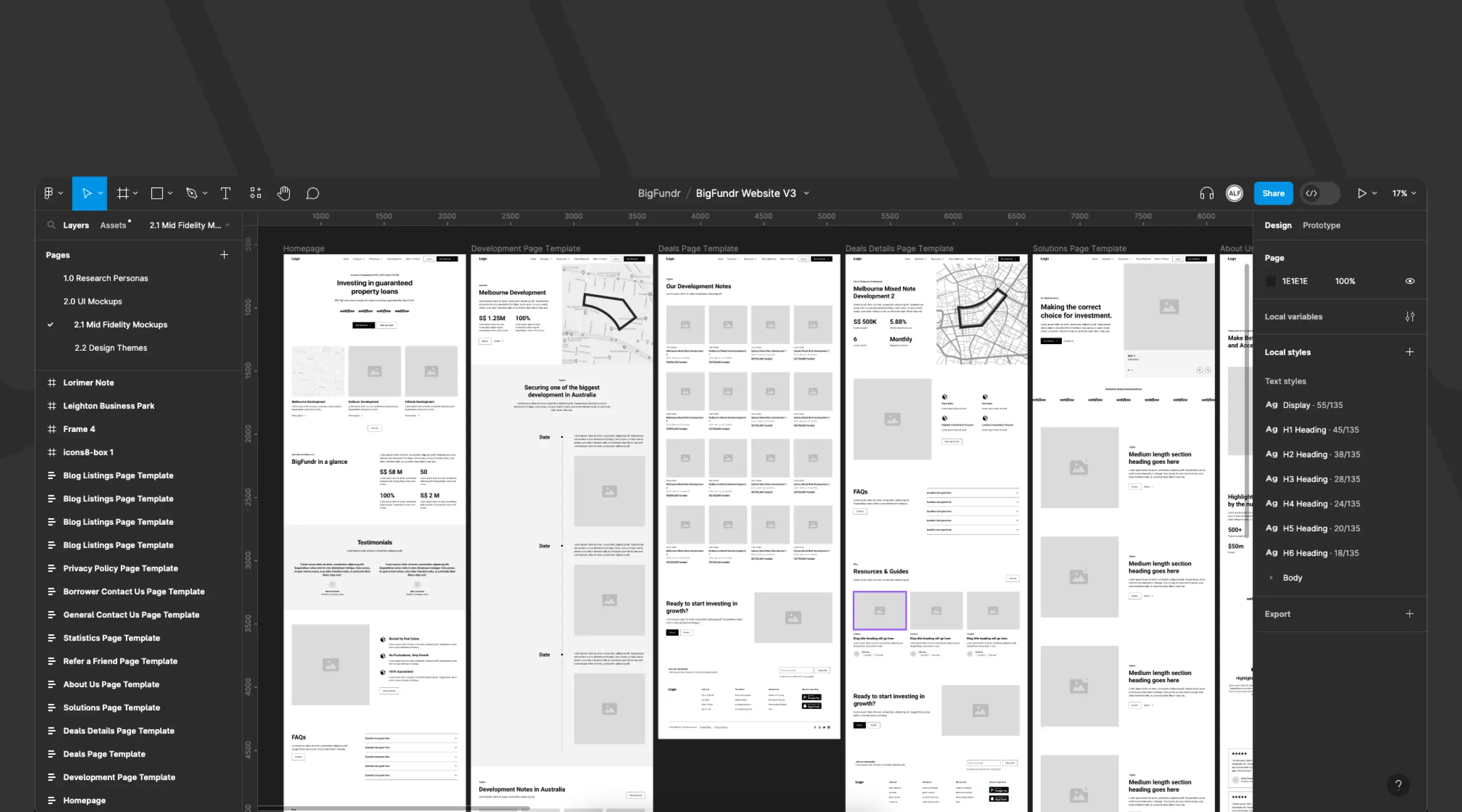
The structural decisions — made quietly, before a single pixel is placed — are the ones that define the final experience. If you have ever read about how we designed BigFundr's investment app, you will see this principle at work: the most impactful design choices were made before the design even began.
Design principle: Begin every project with wireframes, clear user flows, and a scalable content structure. Surface beauty is only as strong as the skeleton beneath it.
Patience and Iteration: The Long Game
Nobody who has raised a child believes that good parenting happens in a single decisive moment. It happens in thousands of small ones — the bedtime routine repeated for years, the question answered for the fifth time with the same patience as the first, the encouragement offered after a failure, and then again, and then again.
Design works the same way.
The first version is rarely the best version. The first user test surfaces problems you did not know existed. The first round of feedback reveals assumptions you did not realise you had made. The design that ships six months after the first prototype is almost always better — not despite the iteration, but because of it.
In Singapore's fast-moving market, there is often pressure to launch quickly and optimise later. That instinct is understandable, but it requires a foundation of genuine iteration — not just launching and forgetting, but building, listening, adjusting, and building again. The discipline to stay in that loop, even when it feels slow, is where the best digital products come from.
If you have ever stared at a blank canvas wondering where your design instinct went, this piece on recovering from creative burnout is worth reading — it speaks directly to the patience that sustained creative work requires.
UX practice: Embrace user testing and feedback loops. Design, like parenting, is a process — not a product. The best version is always the next one.
Purposeful Restraint: Knowing What to Leave Out
Some of the most underappreciated qualities of great fathers are the things they chose not to do. They did not react when they could have. They did not offer an opinion when silence was more useful. They made space rather than filling it.
In design, this is called restraint — and it is harder to practise than it sounds.
Every element added to a page competes for the user's attention. Every additional call-to-action increases the risk of decision paralysis. Every extra animation, every additional colour, every additional section heading adds cognitive load that the user has to process before they can get to what they actually came for.
The discipline to remove things — to say 'this feature is interesting but not necessary', to strip a layout back to its most essential elements — is what separates good design from great design. Dieter Rams said it directly: good design is as little design as possible.
A father who knows when not to speak has mastered something most people spend a lifetime trying to learn. A designer who knows when not to add has mastered something similar.
The most powerful design decision is often the one you did not make.
Quiet Legacies: Design That Outlasts the Designer
The most meaningful thing a father can leave behind is not money, or status, or achievement — it is the values he passed on. The way his children approach problems. The standards they hold themselves to. The instinct to do things properly, even when nobody is watching.
The greatest design systems work the same way. Apple's Human Interface Guidelines, Google's Material Design, the BBC's GEL framework — these are not just style guides. They are distilled design philosophy, built to be interpreted and extended by designers who were not in the room when the original decisions were made.
Good design, done with intention, teaches the next person who inherits it how to make decisions. It leaves a trail of reasoning that others can follow. It creates a standard that outlives the specific project — and that standard is its legacy.
In Singapore's growing design community, where digital product quality is rising rapidly and user expectations are rising with it, the ability to build design systems that others can maintain and extend is becoming one of the most valuable capabilities a design team can have.
That kind of thinking — long-term, structural, legacy-minded — is, when you think about it, exactly what the best fathers model every day.
A Father's Day Tribute to Purposeful Design
This Father's Day, we are not just celebrating our dads — we are honouring the design dads, too. The ones who taught us to build with intention, to lead with quiet strength, and to design for longevity over applause.
Whether you are a designer, a founder, or someone who simply appreciates things that are built well — the values of great fatherhood are worth carrying into your work. Stability. Patience. Structural thinking. Purposeful restraint. A willingness to do the unglamorous work that no one notices until it is not there.
Happy Father's Day to every unsung builder — of lives, and of great digital experiences.
From the team at ALF Design Group, Singapore.
{{build-better-experience="/directory"}}
Categories
Written By

Resources
Related Articles
Deep dive into our latest news and insights.
.webp)