
What Is Figma? A Guide for Singapore Business Owners
What Figma is, what you'll see as a client, and how ALF uses it with Webflow.
Table of contents
Free Website Audit
We'll personally review your website across 6 areas. UX, SEO, performance, mobile, conversion, and send you a detailed, actionable report within 48 hours. No cost. No catch.
Figma is a cloud-based design tool. It lets designers, clients, and developers work inside the same file at the same time. Nobody installs software, and nobody emails versions back and forth. Figma has become the industry-standard platform for collaborative design. It holds roughly 42% of the market, ahead of every other tool combined. For a Singapore business commissioning a website, Figma is where the actual project happens. You review layouts, leave comments, and watch a clickable prototype before a single line of code exists. ALF Design Group uses it on every engagement, most often to hand a finished design straight into a Webflow build.
What Is Figma, Exactly?
Figma is a browser-based design tool. It runs in the cloud, so nothing needs installing. Designers, clients, and developers open the same file. They see the same version, updated live.
That single detail changes how a project runs. Older tools relied on exported files, email threads, and separate handoff software. Each step was a chance for a version to fall out of sync. Figma replaces all three with one shared space everyone can reach from a browser.
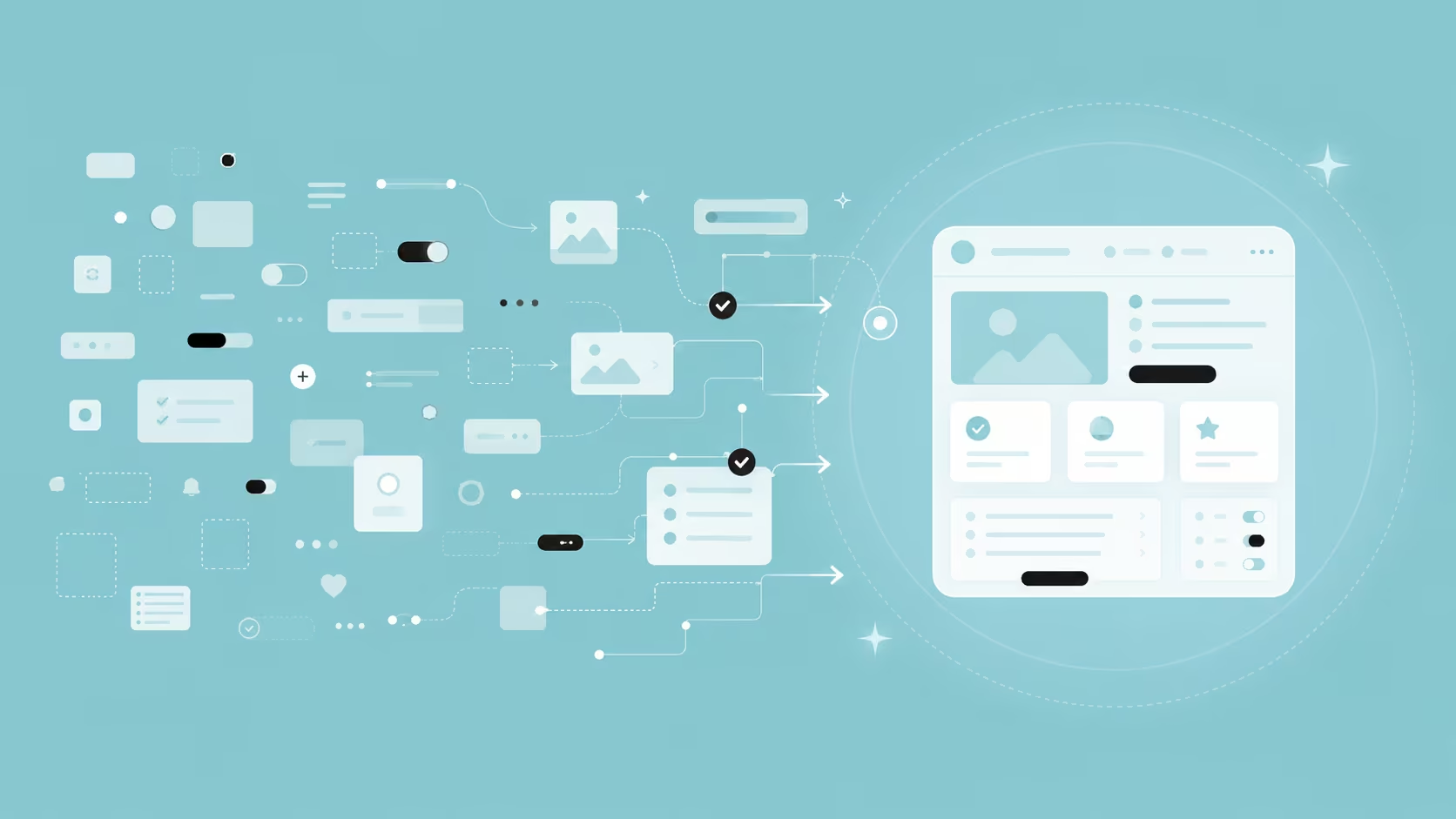
Inside that shared space, a project usually moves through the same stages. Wireframes come first, rough page layouts that settle the structure. Full visual designs follow, with real colours, type, and imagery. Then comes an interactive prototype, a clickable version of the design. It behaves like the real website before any code exists.
Figma also leads its category by a wide margin. It holds roughly 42% of the collaborative design and prototyping market, more than Adobe's various design tools combined. That figure comes from 6sense's 2026 market-share data.
That scale matters to a business owner, not just a designer. A tool this widely used has a large plugin ecosystem and deep documentation. A developer on almost every team already knows it. You're not betting your project on something niche or short-lived.
I used Sketch for four or five years before switching. The change felt uncomfortable at first. That was mostly because the interface was unfamiliar, not because Sketch was worse. I work just as comfortably in either tool today. Figma has simply become the standard most teams and clients already expect, which matters more than any individual feature.
It's one of several design and prototyping tools we've compared for Singapore businesses. Figma is the one nearly every client already recognises, even before a project starts.
At ALF, everyone touching a project works inside the same Figma file. The designer builds it, the developer references it during the Webflow build, and you review it as the client. Nobody is working from a separate copy or an outdated export.
| Before Figma | With Figma |
|---|---|
| Design files emailed back and forth, versions easy to mix up | One live file everyone opens, always the current version |
| Feedback collected in emails or meeting notes | Comments pinned directly to the design element they're about |
| Developers estimate spacing and colours from a flat image | Developers read exact values straight from the file in Dev Mode |
| A new team member needs the software installed to view anything | A published link opens in any browser, no installation needed |
What Do You Actually See When ALF Uses Figma on Your Project?

You will get a link, not a login. Opening it shows the actual design in your browser. There is nothing to install and no account to create.
Most clients ask about this first. They assume a shared design file needs a sign-in, the way many software tools do. It doesn't. A published Figma link opens straight in any browser, on a laptop or a phone.
The next question is usually ‘what am I looking at?’ That happens when no page or frame is selected yet. We point clients to the specific section, homepage, checkout, a particular page. That way the file makes sense immediately, rather than reading as one long, undifferentiated canvas.
Once you're oriented, the useful part starts. Here's roughly what happens the first time we send you a link:
- Open the link. It loads in your browser, no account needed.
- We point you to the right page or section for that review.
- Click through the prototype the way a real visitor would, tapping buttons and moving between pages.
- Leave a comment pinned to the exact element you're reacting to, not a vague note in an email.
- The whole team sees your comment the moment you post it, and can reply in the same thread.
The mockups we build together in Figma work the same way, whatever the project. A small landing page and a full multi-page website both start from the same shared file, reviewed the same way.
Why Does the Design-to-Development Handoff Matter So Much?
Handoff, the step where a finished design becomes working code, is still the weakest link in most projects. According to Figma's own research, 84% of designers collaborate with developers at least weekly. Yet 91% of developers and 92% of designers still believe the handoff process could be better.
That gap is worth sitting with. Teams are talking constantly, and the process still frustrates almost everyone involved. The problem usually isn't communication itself. It's that the design and the build live in two separate systems, so something always gets lost translating between them.
Figma closes part of that gap with a feature called Dev Mode. A developer opens any element in the same file the designer built. They inspect it directly, instead of guessing from a flat image. Dev Mode surfaces:
- Exact spacing between elements, in pixels
- Colour values, as hex codes ready to paste into code
- Font sizes, weights, and line heights
- Ready-made CSS and code snippets for many components
None of it needs re-measuring by hand or asking the designer to confirm a value. That's the part of the 91% figure a good process actually fixes.
A poor handoff doesn't just annoy the people doing the work. It shows up as spacing that's slightly off, colours that don't quite match, and extra rounds of revisions after launch. For a business owner, that's time and cost, not just a design detail.
That gap between how often teams collaborate and how well it works is exactly what Figma's shared-file model closes. We've written before about how we approach designer-developer partnerships in more detail.
How ALF Keeps Figma and Webflow in Sync
We name every layer, frame, and component the same way it will appear later in the Webflow build. That single habit removes most of the friction other agencies run into at handoff.
The convention we follow is Client-First, a naming and structuring system built by Finsweet specifically for Webflow projects. It sets clear rules for how classes and components should be named, ordered, and reused.
Applying it from the first Figma frame means a component never needs renaming once it reaches Webflow. A developer can find any element without asking what it's called or where it lives in the file.
It also removes a common training problem. Junior designers often skip naming layers altogether, because nothing forces them to think about it early on. Client-First gives them a structure to follow from day one. Naming stops being optional or left for later.
The result is consistency, not a safety net for catching mistakes after the fact. What we design in Figma is what gets built in Webflow, project after project. There's no separate review step needed to reconcile the two.
The BigFundr Example
This is the same workflow we used on BigFundr's website redesign. Pages and components in Figma carried the Client-First names straight into the Webflow build. Nothing needed renaming in between.
The handoff service itself, what we now call our Figma to Webflow process, grew directly out of that discipline. It wasn't designed on a whiteboard first. It came from doing the same handoff cleanly enough times that it became a repeatable process.
How Does Figma Handle Version Control and Shared Libraries?
Figma saves every change automatically, and keeps a full version history behind it. There's no ‘final_v3_reallyfinal.fig’ file to lose track of. Anyone with access can open the version history and see exactly what changed, and when.
Shared libraries are the other half of this. Colours, type styles, and reusable components live in one central library, referenced by every page in the file. Change a button style once. It updates everywhere that button is used, instead of needing a manual fix on every page.
For a multi-page website, that consistency matters more than it sounds. A client site with twenty or thirty pages stays visually coherent. That's because the underlying components are shared, not copied and quietly drifting apart over time.
It also protects you if a project pauses for a few months. Reopening the file later shows the same structure and the same names. The library is still there too, rather than a designer having to reconstruct what an old export file meant.
Figma's Newest Features for 2026, in Brief
Figma's Config 2026 event introduced several updates worth knowing about, even if we haven't used all of them ourselves yet. Figma Motion adds timeline-based animation directly inside design files. It can export to CSS, React, or video. A motion spec no longer needs a separate document.
The design agent inside Figma now connects to outside tools, including GitHub and Slack. It can also be given custom skills for repeatable tasks. Those are the small jobs a team does the same way every time.
A new feature called Code Layers turns a design frame into working, editable code with one click. It's still in early access, so it isn't part of any client project yet.
There's also a Dev Mode MCP server in beta. It lets AI coding assistants read a Figma file directly, right down to component names, styles, and layout. The code it generates matches the design more closely than working from a screenshot alone.
None of these are part of our day-to-day process yet. Client-First and a clean handoff still cover what we need on most projects. They are worth watching, though, as they mature out of beta and start showing up in client work.
Do I Need to Know Figma to Work With ALF?
No, you don't need to know Figma at all. The only skill that helps is knowing how to leave a comment on a design. That takes about ten seconds to learn, and we'll show you the first time.
That's deliberate. When you work with a Singapore web design agency like ours, our tools should stay out of your way. They shouldn't become one more thing you have to learn on top of running your own business.
Frequently Asked Questions
Does Figma cost anything to use?
Figma offers a free plan that covers most single-project needs, including commenting and viewing prototypes. Paid plans add extra features like advanced version history and shared team libraries. Pricing scales with the number of paid seats, not by project. A client reviewing a design rarely needs a paid seat at all.
Can I comment on a Figma prototype from my phone?
Yes. A published Figma link opens in any mobile browser. You can leave comments directly on the design, no app required. Comments show up for the whole team in real time, the same as on desktop. Feedback given on a phone during a commute reaches the designer just as fast.
What happens to the Figma file after my website goes live?
The Figma file stays with your project as a reference, even after the Webflow site is live. If you ever need to redesign a page or brief a new agency, it's the starting point. It's not a file you have to hunt down first. This is part of how we run a web design project end to end.
Is Figma the same as Webflow?
No, they do different jobs. Figma is where a website is designed, reviewed, and approved before anything is built. Webflow is where that approved design actually becomes a live, working website, with real content and real functionality.
Do I need to give feedback on every page at once?
No. Comments can be left page by page, whenever you have time, rather than in one long review session. Most clients work through a Figma file in short bursts over a few days. That usually produces better feedback than one rushed sitting.
Where This Leaves You
If you're about to start a website project, ask whoever designs it for a published Figma link early. Don't settle for a final PDF alone. Comment on the live file directly. That's the fastest way to catch a layout problem before it reaches development.
Ask how a new designer names Figma layers, and whether that naming carries into the build. A vague answer is usually a sign the handoff will be rough. You'll pay for it later in revisions.
None of this needs to be complicated on your end. A clean Figma file and a disciplined handoff process are the agency's job to get right. They're not yours to manage or double-check.
Our approach to Figma, including the plugins we rely on day to day, is built around one goal.
It should make the handoff invisible to you.
{{build-better-experience="/directory"}}
Written By

Resources
Related Articles
Deep dive into our latest news and insights.
.webp)
