Does Web Design Include SEO? What Businesses Should Know
Basic SEO should be part of proper web design because structure, UX and content clarity affect performance.
Table of contents
Free Website Audit
We'll personally review your website across 6 areas. UX, SEO, performance, mobile, conversion, and send you a detailed, actionable report within 48 hours. No cost. No catch.
Yes — basic SEO should be part of every properly built website: clear page structure, correct heading hierarchy, metadata, alt text, mobile responsiveness, and clean navigation. What it doesn't automatically include is ongoing SEO growth work — keyword research, blog strategy, and continuous content optimisation — which is a separate, ongoing service. The two are connected rather than sequential: SEO helps the right page get found, and UX determines whether the person who finds it stays, understands it, and acts. A website can look polished and still underperform if these foundations are missing.
So, Does Web Design Include SEO?
The honest answer is yes — at least basic SEO should be included. If a website is being designed properly, SEO cannot be treated as an afterthought. The way a page is structured, written, labelled, linked, and built affects how easily search engines can understand it and how easily users can move through it.
For a business website, SEO should not begin only after the website is launched. It should be considered during planning, sitemap creation, page layout, content hierarchy, development, and launch preparation. This does not mean every web design agency is responsible for making your website rank number one immediately — that is not realistic and not how SEO works. But a web design agency should at least make sure the website is built on proper SEO foundations.
A website that is launched with missing meta titles, confusing headings, poor mobile layouts, broken navigation, unoptimised images, unclear page structure, or service pages that do not explain what they are about is already starting from a weaker position. For the full picture of how web design decisions affect SEO at every level, see our guide on how UX and SEO work together to build a website that ranks and converts.
For businesses in Singapore, this matters even more because many industries are highly competitive online. Whether you are a professional services firm, technology company, finance business, education provider, or B2B service provider, your website is often one of the first places people go before making an enquiry. If users cannot find your website, understand your services, or trust what they see, the website is not doing its job.
The Difference Between Basic SEO and Ongoing SEO
One of the reasons this question causes confusion is because people use the word "SEO" to mean different things. Some clients ask "Is SEO included?" and mean "Will my website rank on Google?" Others mean "Will you write my meta titles?" Some mean "Will you do keyword research?" Some mean "Will you manage my blogs every month?"
These are very different scopes. A good way to understand it is this:
Basic SEO is about building the website correctly. Ongoing SEO is about improving visibility, content, and performance over time. Both are important, but they are not the same service.
Basic SEO has a clear endpoint — it is complete when the website launches properly. Ongoing SEO has no endpoint — it is a continuous programme of monitoring, content creation, keyword optimisation, and performance improvement. For what ongoing SEO involves in practice, see our guide on SEO maintenance for Singapore businesses.
What Basic SEO Should Include in Web Design
Basic SEO should be included because these items are part of building a proper website. They are not luxury extras. They are foundational. For the broader context of what makes a well-built website, see our guide on web design best practices.
1. Proper Page Structure
Every important page should have a clear purpose. Before thinking about keywords, you need to understand what the page is supposed to do. Is it a service page? A landing page? A blog article? A case study? A contact page? Each page should answer a specific user need.
For example, a service page should explain what the service is, who it is for, what problem it solves, how the process works, why the business is credible, and what the user should do next. If the page is unclear, no amount of keyword optimisation will fix it.
At ALF Design Group, we usually start by looking at the navigation structure, sitemap, page intent, and user journey before we think too deeply about keyword opportunities. SEO should support the business structure, not force the website into a keyword-first mess.
2. Correct H1, H2 and H3 Heading Hierarchy
Headings are not just visual styling. They help organise the content. A proper page should usually have one clear H1 that explains what the page is about, a short supporting summary below it that gives users immediate context, H2 headings breaking the page into meaningful sections, and H3 headings supporting more detailed points.
This structure matters because users do not read websites like books — they scan. Good headings help users quickly understand whether the page answers their question. They also help search engines interpret the content more clearly. A beautiful page with poor headings may look polished but still perform badly because the content hierarchy is weak.
3. Meta Titles and Meta Descriptions
Meta titles and meta descriptions are basic SEO elements that should be prepared before launch. The meta title helps search engines and users understand the topic of the page. The meta description gives a short preview of what the page is about. They do not guarantee rankings, but they influence how your page appears in search results and can affect click-through rates.
A common mistake is using generic metadata that says very little — for example, "Home | Company Name". A better title should describe what the business offers and, where relevant, include the target service or location naturally. For Webflow websites, AI tools can help produce draft metadata, but the output should always be reviewed to ensure it is specific, relevant, and aligned with the page intent.
4. Image Alt Text
Image alt text is a basic SEO and accessibility requirement. Alt text helps describe images for users who rely on screen readers, and gives search engines more context about the visual content on the page.
The goal is not to stuff keywords into every image description. The goal is to describe the image accurately and usefully. For example, instead of writing "web design Singapore best web design agency", a better alt text might be "Homepage design mock-up for a Singapore business website". Good alt text supports accessibility, usability, and SEO simultaneously.
5. Mobile Responsiveness
Mobile responsiveness is not optional. Many users will first visit your website on a mobile device. If the page is difficult to read, buttons are too small, sections break awkwardly, or forms are painful to complete, users may leave before they even understand what you offer. This affects both UX and SEO.
A web design project should include mobile optimisation as part of the core scope — testing layout, spacing, typography, buttons, menus, images, forms, and interactive elements across screen sizes. For Singapore businesses, this is especially important because many users browse, compare, and enquire on mobile while commuting or researching between tasks.
6. Schema Markup
Schema markup is structured data that helps search engines understand your website content more clearly. For business websites, schema can be used for elements such as organisation information, local business details, breadcrumbs, articles, services, and FAQs. Schema does not guarantee rankings, but it can help search engines interpret your pages better and support eligibility for certain rich results.
At ALF, we think about schema as part of the overall page structure. If a service page includes FAQs, FAQ schema may be considered. If a blog article is published, BlogPosting schema may be relevant. If the website has clear navigation hierarchy, BreadcrumbList schema can help reinforce that structure. This is not magic — it is part of building the website properly.
7. Clean Navigation and Internal Links
Internal linking depends on the size and type of website. For a small brochure website, internal links may simply come from the navigation menu and key CTA sections. For a larger website with blogs, resources, case studies, or multiple service pages, internal linking becomes much more important.
Internal links help users move through related content and help search engines understand the relationship between pages. For example, a blog article about website design cost in Singapore should naturally link to a web design service page. A Webflow migration article should link to a Webflow service. If a business wants to take SEO seriously, internal links should not be random — they should support the user journey. For how Webflow handles SEO through its architecture, see that dedicated guide.
What Ongoing SEO Includes Separately
Once the website has a proper foundation, ongoing SEO is about growth and continuous improvement. This is where the scope becomes different from basic web design. At ALF Design Group, our SEO services can include keyword research, blog strategy, AEO and GEO planning, blog optimisation, and Google Search Console monitoring. Content writing can be included as an optional add-on, but we generally believe clients should be involved in providing subject matter expertise — especially for specialised businesses.
For locally focused businesses, ongoing work usually includes Google Business Profile and review management.
Keyword Research
Keyword research is about understanding what users are searching for and how those searches connect to business intent. But it should not happen in isolation. Before chasing keywords, we need to understand the business: what the company offers, who its customers are, what problems it solves, which services are most profitable, and which audiences matter most. Without business context, keyword research can lead to content that brings traffic but not the right traffic.
Blog Strategy
Blog strategy is not about publishing random articles because "SEO needs content". A proper blog strategy should support search intent, user education, topical authority, internal linking, and business goals. For example, a web design agency might create articles around website cost, choosing an agency, Webflow vs WordPress, UX mistakes, landing page optimisation, and SEO foundations — each article having a specific role in the content ecosystem.
AEO and GEO Planning
Search is changing. People are not only searching through traditional blue links anymore. They are also asking questions through AI tools, answer engines, and generative search experiences. This means content needs to be clearer, more structured, and more directly useful.
AEO, or Answer Engine Optimisation, is about structuring content so it answers questions clearly. GEO, or Generative Engine Optimisation, is about helping content become more useful and reference-worthy in AI-influenced search environments. FAQ sections, clear definitions, concise explanations, structured headings, strong topic coverage, and helpful summaries are becoming even more important as a result.
Blog Optimisation
Many businesses already have blogs, but the content may not be performing. Sometimes the articles are too thin, have weak headings, lack internal linking, or do not connect to a service or user journey. A 100-word blog post is unlikely to rank well for a competitive topic if it does not provide enough depth, clarity, or value.
Ongoing SEO often involves improving existing content rather than constantly creating new pages — rewriting headings, expanding thin sections, improving metadata, adding FAQs, refreshing examples, and linking to relevant pages. Our SEO maintenance checklist covers what regular content optimisation involves in practice.
Google Search Console Monitoring
Google Search Console shows how pages are performing in search — which pages are getting impressions, which queries are driving visibility, which pages have low click-through rates, and which content may need improvement. The value is not just in looking at the numbers. The value is in deciding what to do next.
If a page is getting impressions but low clicks, the meta title and description may need improvement. If a blog article is attracting traffic, the user journey from that article to an enquiry page may need to be strengthened. At ALF, we use this data to understand which pages are working and how users can be guided more intentionally through the website.
What Clients Often Misunderstand About SEO
Many clients think SEO means ranking number one on Google. That is the visible outcome they want, but it is not the full picture.
Good SEO starts with whether the website itself deserves to be found. Does the page answer the user's question? Is the structure clear? Is the content useful? Is the page easy to navigate? Does it help users make a decision? For a complete overview of how to improve SEO for your website, see that dedicated guide.
SEO is not:
- A switch that gets turned on after launch
- Just adding keywords to a page
- Only writing meta titles
- Simply building backlinks
- Publishing short blog posts and expecting first-page rankings
Clients need to understand what is included, what is not included, and why SEO needs both foundations and ongoing work.
The Problem with Designing First and Thinking About SEO Later
When SEO is only considered after a website is designed, problems often appear. The website may look good, but the pages may not be structured properly. The navigation may not reflect how users search. Important services may be hidden inside one generic page. Headings may be written for visual impact but not clarity. Content may be too thin. Blog posts may exist without any real search intent. Internal links may be missing.
By the time SEO is brought in, fixing these issues can require restructuring the website. This is why foundational SEO should be considered early.
A common issue is when businesses engage external SEO agencies that focus heavily on backlink building while neglecting the actual website pages. Backlinks may have a role, but they cannot fully compensate for weak foundations. If the core pages are thin, unclear, badly structured, or not aligned with user intent, the website still has a problem. Some businesses publish very short articles and expect them to rank simply because they exist — but search performance requires more than that.
How ALF Thinks About SEO During Web Design
As a UX-driven web design agency, ALF does not start with keywords first. We start by understanding the business — what the company does, who the audience is, what the business wants to achieve, and how users currently move through the website.
We Start with Navigation Structure
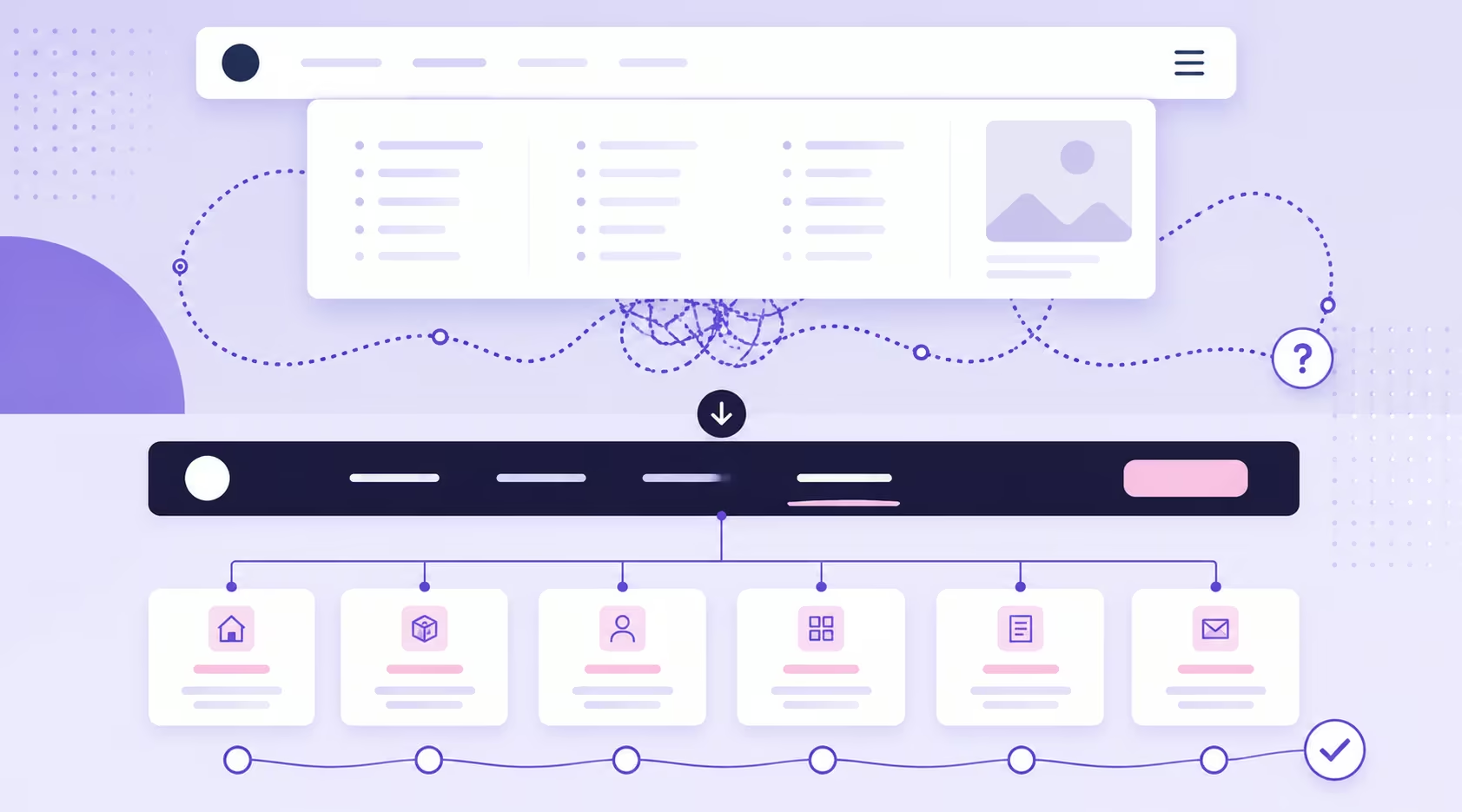
Navigation tells us a lot about how a business understands itself. If the navigation is confusing, users may struggle to understand what the company offers. If important pages are buried, users may not find them. If labels are vague, people may not know where to click. A clear navigation structure supports both UX and SEO — it helps users move through the website and helps search engines understand the relationship between pages.
We Review the Sitemap
A sitemap is not just a list of pages — it is the structure of the website. When reviewing a sitemap, we look at whether the pages make sense, whether important services have their own pages, whether the hierarchy is logical, and whether the website can support future content. Sometimes the solution is not to create more pages immediately but to restructure existing pages so they have clearer purpose, better hierarchy, and stronger content.
We Categorise Pages by Intent
Not every page has the same job. Some pages are for awareness. Some are for consideration. Some are for conversion. Understanding this helps us plan the website journey more intentionally. TOFU content helps users understand a topic or problem. MOFU content helps them compare options and evaluate solutions. BOFU content helps them take action.
For example, a blog article explaining what UX design is may be TOFU. A comparison article between Webflow and WordPress may be MOFU. A web design service page may be BOFU. Understanding this intent structure ensures every page earns its place in the sitemap.
We Look at GA4 User Journeys
If the business already has a website, we look at GA4 to understand how users are moving through it. Which pages are they landing on? Where do they go next? Which pages support enquiries? Where do users drop off? Are high-traffic pages connected to conversion paths? SEO is not just about bringing users to the website — it is also about what happens after they arrive. For how this analysis connects to conducting a proper usability audit, see that guide.
We Use SEO to Support UX, Not Replace It
Our approach is to plan the UX first, then support it with proper SEO structure. If a section uses an H2 heading, the paragraph below should answer that H2 clearly. If a user lands on a page with a specific question, the page should not force them to hunt for the answer. The content should be structured in a way that makes sense to humans first — SEO then reinforces that structure. This is why SEO and UX should not be separated. For the complete framework, see our guide on how SEO and UX work together.
How SEO Thinking Changes Website Structure
SEO thinking often changes how a website is structured, but not always by adding more pages. Sometimes the work is about making existing pages clearer.
A proper page restructure might involve:
- Rewriting the H1 so it clearly explains the page
- Adding a short summary below the H1
- Reorganising H2 sections around user questions
- Adding FAQs to handle objections
- Improving internal links to related pages
- Making the CTA more visible
- Strengthening trust signals
- Clarifying who the service is for
- Adding process, outcomes, or proof points
This is where marketing frameworks help. A page should not just describe the service — it should guide the user through a decision-making process. What problem do they have? Why does it matter? What solution is being offered? How does the process work? Why should they trust you? What should they do next? When SEO and UX work together, the page becomes easier to find and easier to act on.
Why FAQs Are Useful for SEO and UX
FAQs have become a normal part of service page design for a good reason. A service page cannot explain everything in the main copy without becoming too long, too dense, or too difficult to scan. FAQs allow the page to answer specific questions without disrupting the main flow.
FAQs are useful for questions such as: How long does the project take? What is included? How much does it cost? Do you provide support after launch? Will SEO be included? Can we update the website ourselves?
From a UX perspective, FAQs reduce uncertainty. From an SEO and AEO perspective, FAQs help structure answers clearly. This is especially useful as users increasingly search in question-based formats — they are not only typing short keywords but asking full questions. A well-written FAQ section helps your page respond to those questions directly.
UX and SEO Should Work Hand in Hand
UX and SEO should never be treated as completely separate disciplines. SEO helps users find the page. UX helps users move through the page. If SEO brings users in but the page is confusing, slow, vague, or difficult to use, the opportunity is wasted. If UX is strong but the page cannot be found, the business may miss out on valuable organic traffic.
A good website should be discoverable, understandable, persuasive, and easy to use. For example, a user may search for "web design agency Singapore" because they are comparing agencies. If they land on a page, they need to quickly understand what the agency does, who it serves, what makes it credible, what services are available, and how to enquire. SEO brings that user to the page. UX helps the user decide whether to stay, explore, and take the next step.
Every page should have a job. Every page should answer something. Every page should help the user move somewhere meaningful.
Case Example: TrafficGuard Website Restructuring
One example from our experience is TrafficGuard. Through website restructuring, we worked on improving the way users moved through the website and how the content supported the journey towards signups. The goal was not simply to make the website look better — the goal was to make the structure clearer, the journey more intentional, and the website more useful for users. After restructuring, the improved user journey helped generate more signups than before.
This is the kind of outcome that shows why web design, UX, and SEO cannot be separated. A website does not perform better only because it has nicer visuals. It performs better when the structure, content, journey, and intent are aligned.
We are also helping restructure TrafficGuard's blog content to make it more SEO, AEO, and GEO friendly — reviewing how articles are structured, how they answer user questions, how they support search visibility, and how they fit into the broader content ecosystem. In a search environment where users are asking more complex questions and AI-influenced experiences are becoming more common, the goal is not just to publish content but to make it useful, findable, and connected to the user journey.
Should a Web Design Agency Also Understand SEO?
Yes. A web design agency does not need to promise first-page rankings as part of every design project. But it should understand SEO well enough to avoid building a website that creates problems later.
A proper web design agency should understand how design decisions affect SEO:
- Navigation affects crawlability and user flow
- Headings affect content structure
- Page speed affects user experience
- Mobile responsiveness affects usability
- Content depth affects relevance
- Internal links affect discovery
- FAQs affect clarity
- Schema affects structured understanding
- URLs affect readability
- Page intent affects whether users get the answer they came for
This does not mean design agencies need to replace SEO specialists. But they should understand enough SEO to build correctly from the start — especially if the website is expected to generate enquiries, support campaigns, or rank for service-related keywords.
What Businesses Should Ask Before Starting a Web Design Project
If you are hiring a web design agency in Singapore, do not only ask whether SEO is included. Ask what kind of SEO is included. Here are better questions to ask:
What basic SEO work is included in the website build?
This helps clarify whether the agency will handle metadata, headings, alt text, schema, URLs, mobile responsiveness, and page structure.
Do you plan the sitemap before designing the pages?
This shows whether the agency thinks strategically about structure before jumping into visuals.
How do you decide what pages the website needs?
This helps reveal whether the agency understands page intent, user journeys, and business goals.
Will you help structure the content?
Even if the client provides the copy, the agency should be able to guide how the content is organised on the page.
Do you include meta titles and meta descriptions?
This is a basic item but worth confirming explicitly.
Will you add schema markup where relevant?
Not every page needs complex schema, but important pages should be considered.
How do you think about UX and SEO together?
A strong answer should connect discoverability with usability and conversion.
Do you offer ongoing SEO after launch?
This helps separate the website build from ongoing SEO growth work. Our SEO services cover both post-launch monitoring and long-term content strategy.
Frequently Asked Questions
Can SEO be added to a website after it's already been designed, if it wasn't part of the original build?
Yes, but it's more work than building it in from the start. Retrofitting SEO onto an existing site usually means auditing and rewriting headings, adding missing metadata, restructuring pages that were built around visual layout rather than user intent, and sometimes rebuilding navigation if important services were never given their own page. None of this is impossible, but it's slower and more expensive than getting the structure right during the original build, since some fixes require reworking design decisions that are already live.
Does adding basic SEO increase the cost of a web design project?
Not meaningfully, if it's built in from the start rather than retrofitted. Proper heading structure, metadata, alt text, and clean navigation are part of doing the build correctly — they don't require a separate line item the way ongoing SEO strategy or content production does. Where cost does increase is if SEO is treated as an afterthought and requires a second round of restructuring once the site is already live. For how basic SEO factors into typical project quotes, see our website design cost guide.
If I already have a website, how do I know whether it has proper SEO foundations or not?
A few checks you can do yourself: look at whether each page has a unique, descriptive title and meta description, whether your most important service pages have their own URL rather than being buried inside a general page, and whether your site loads and displays properly on mobile. Beyond that, a proper technical review — checking heading structure, schema, internal linking, and page speed together — usually needs a closer look than a self-check can provide. Our free website audit is built for exactly this kind of diagnostic.
Is keyword research included in web design, or is it always a separate service?
It depends on the agency and the scope agreed upfront, but in most cases, deeper keyword research sits under ongoing SEO rather than the initial web design build. A web design project should still be informed by basic keyword awareness — making sure page titles and headings use language your customers would actually search for — but a full research process, competitor keyword mapping, and content planning is typically a separate, ongoing scope.
Do I need a separate SEO agency, or can my web design agency handle both?
Some web design agencies genuinely offer both under one roof; others focus purely on design and expect you to bring in an SEO specialist separately. Neither approach is wrong, but it's worth clarifying upfront rather than assuming. If your web design agency does offer SEO, ask specifically what's included in each phase, since "we do SEO too" can mean anything from basic on-page setup to full ongoing strategy. Our guide on choosing a web design agency covers the right questions to ask before you commit.
Does every page on a website need the same level of SEO attention?
No. Pages serve different jobs, and the level of SEO investment should reflect that. Core service pages and high-intent landing pages usually warrant the most attention — sharper headings, more considered metadata, stronger internal linking. Lower-priority pages, like a careers page or a simple thank-you page, need to be technically sound but don't need the same depth of optimisation. Spreading equal SEO effort across every page usually means the pages that matter most get less attention than they deserve.
Should my website have FAQs even if they're not specifically written for SEO?
Yes — FAQs earn their place on a service page by reducing a visitor's uncertainty, independent of any SEO benefit. If a page is getting the same questions repeatedly from enquiries or sales calls, that's usually a sign those questions belong on the page itself rather than only being answered after someone reaches out. The SEO and AEO benefit is a genuine bonus, but the primary reason to include FAQs is that they help a visitor decide faster, with less back-and-forth.
Conclusion
So, does web design include SEO? Yes — basic SEO should be included in every proper web design project. But more importantly, SEO should not be treated as something that gets added at the end. It should influence how the website is planned, structured, written, built, and improved.
For a UX-driven web design agency like ALF Design Group, SEO and UX are not separate conversations. SEO helps people find the right page. UX helps them move through that page with less friction. Together, they help the website become more useful for both users and the business.
The biggest misconception is that SEO is just about ranking number one. It is not. SEO is about doing the foundational work that gives a website a better chance to be found, understood, trusted, and acted on. That means proper structure. Clear headings. Useful content. Mobile responsiveness. Metadata. Schema. Internal links. Strong navigation. Better user journeys. Content that answers real questions.
A website should not only look good. It should be structured properly, easy to use, and built with search visibility in mind from the start.
If you are planning a new website or redesigning an existing one, work with a team that understands how web design, UX, and SEO support each other. At ALF Design Group, we help businesses create websites that are not just visually polished, but strategically structured for clarity, discoverability, and growth.
Explore our services to see how we approach websites as a complete business experience.
{{build-better-experience="/directory"}}
Categories
Written By

Resources
Related Articles
Deep dive into our latest news and insights.

.webp)

.avif)
